
Hinduism: Spiritual Oneness
One of the most distinctive contributions Hinduism brings to the global religious conversation is its vision of spiritual oneness—the idea that ultimate reality is one, even though human beings encounter it in many different ways. Rather than seeing religious diversity as a problem to be solved, Hindu thought often understands it as a reflection of a deeper unity beneath outward differences.
As religious scholar Dr. Diana Eck observes, Hinduism offers a theology of pluralism that resonates strongly in modern, multicultural societies. While the American ideal of E pluribus unum speaks of unity in civic life, Hindu traditions point toward something more profound: a spiritual oneness grounded in the nature of the divine itself. This oneness recognizes a single, transcendent reality that can be approached through multiple religious paths.
That openness is reflected in lived Hindu practice. One Hindu woman explains that she feels free to pray in synagogues, mosques, temples, churches, and gurdwaras alike—not because the differences don’t matter, but because faith ultimately points beyond form. “God is only one,” she says, regardless of how or where people worship.
Sadhguru Jaggi Vasudev describes Hinduism not as a fixed ideology, but as a way of life oriented toward human liberation. For thousands of years, Hindu prayers and chants have emphasized the well-being of all creatures—seen and unseen—highlighting an ethic of inclusiveness that extends beyond the individual. Spiritual life, in this view, is inseparable from compassion and interconnectedness.
Taken together, these perspectives reveal Hinduism as a tradition that approaches unity without erasing diversity. Its emphasis on spiritual oneness invites dialogue rather than division, suggesting that different religions may be less competing truths than varied expressions of humanity’s shared quest for meaning, liberation, and the sacred.
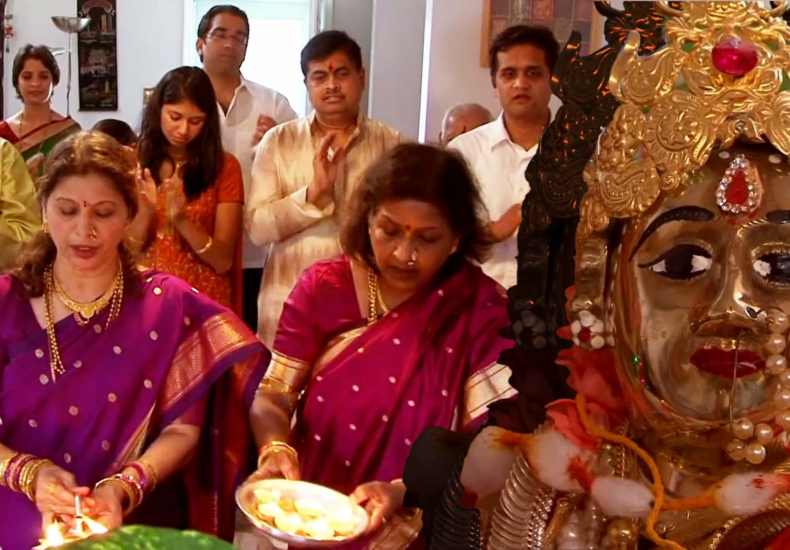
Based on a scene from the documentary, “The Asian & Abrahamic Religions: A Divine Encounter in America”
Watch the video below, followed by the transcript
Entire documentary available for rent on Amazon
Transcript:
It’s very interesting that we have Hindu immigrants in America today because they bring something with them that is really distinctively American, and that is a theology of religious pluralism. We have a motto that says E pluribus unum out of many, one. And we think of that in terms of our civic and our cultural life as immigrants from many parts of the world. But the oneness of which Hindus speak is really something much more profound. It is a spiritual oneness that recognizes the oneness of the transcendent God and as a result, is part of the human quest of every religious tradition. And that’s really integral to Hindu life.
Hindu Woman:
I’ve been to synagogues. I’ve been to mosques. I’ve been to gurudwaras. I’ve been to temples. I’ve been to, churches. Any guide you put in front of me, I will worship him. Because it’s the faith that matters. Not who you worship, how you worship. I mean, it does that. Those are details on which you give their part of what you’re giving. But God is only one. No matter where he comes from, where she comes from, where he or she goes.
The Hindu way of life is not an ism. When I say it’s not, it isn’t. It is not with any concretized ideas about anything. It is, a whole culture fundamentally aimed towards human liberation. Thousands of years ago, every chant that was uttered in that part of the world always talked about the well-being of every creature on this planet. That which you can see, that which you cannot see, the well-being of all, that every prayer was never about the individual person was always about all inclusiveness of life and how life cannot happen without that sense of inclusiveness within us.
Leave a Reply